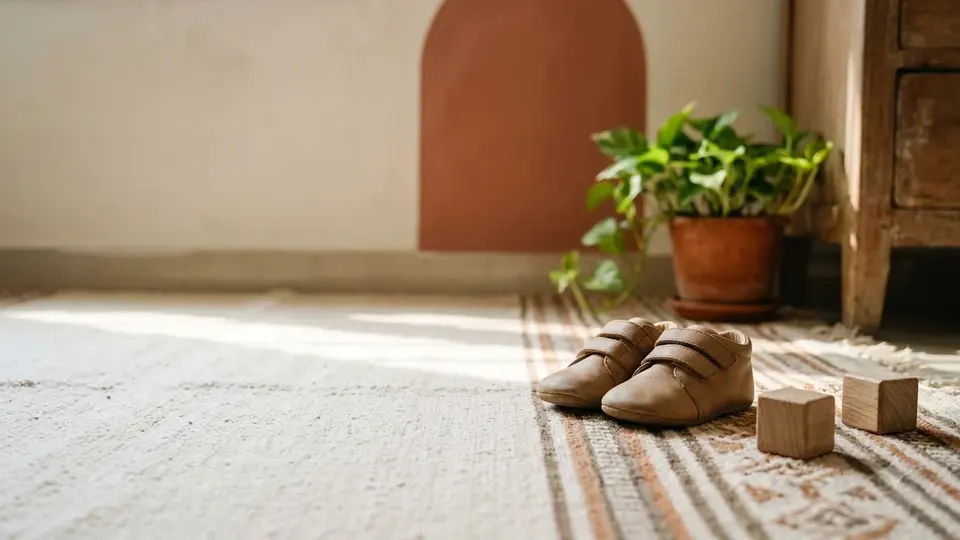
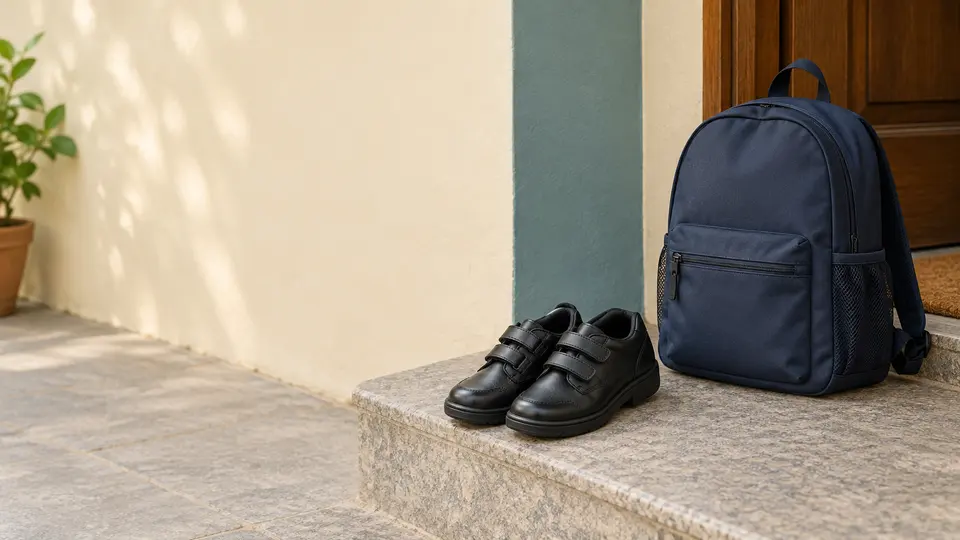
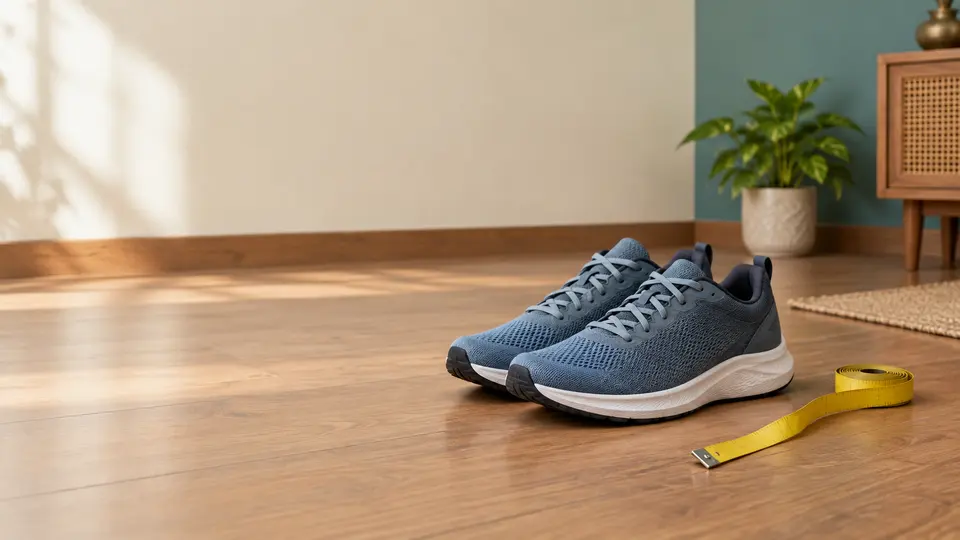
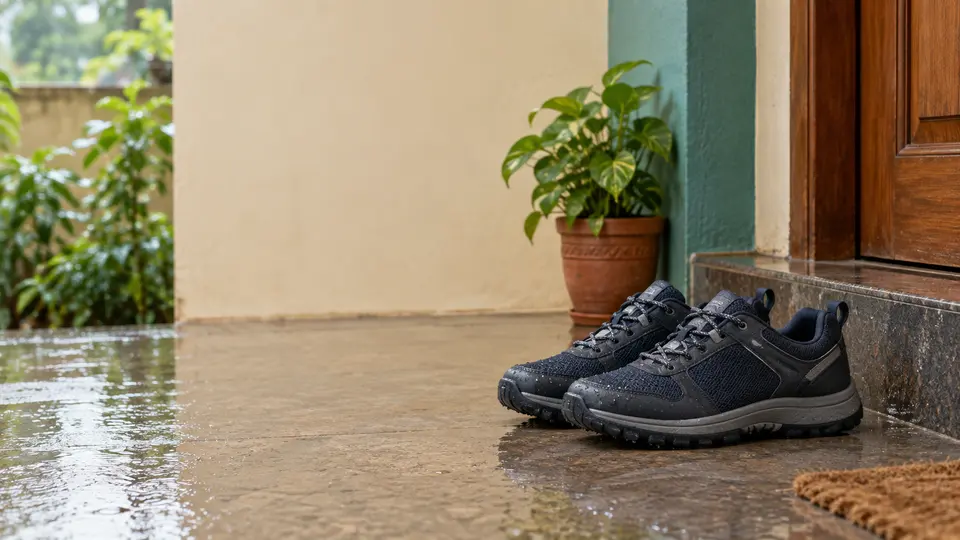
Size labels differ across the four toddler shoe listings, and one of them calls its shoe a slip on although it closes with a strap. For the best first walking shoes for toddlers, that matters because the health bodies quoted below want each foot measured before a pair is chosen, whatever the label says.
As per the Better Health Channel, children usually begin walking between 8 and 18 months.
When a first shoe is needed
The Better Health Channel says a toddler who is learning to walk should be barefoot or in a soft soled shoe as much as possible, so that the child can feel the ground and build muscle in the feet. Once the child has walked confidently for a while, the same page says a firmer sole can follow.
Health for Under 5s says a child does not need shoes until walking independently. Even after that, the site says shoes are not needed all the time, for example around the house.
The American Academy of Pediatrics (AAP) article on HealthyChildren.org says the feet of babies develop best when they are not confined in shoes, and that socks give enough warmth. When children start to walk outdoors, the AAP says they need shoes for protection.
Footwear guards the feet against injury and against heat and cold, as per the Better Health Channel. Parents shopping for a first pair are therefore choosing a shoe for streets and parks, and not for the floor at home.
Most toddlers walk with flat feet or with the feet turned in at first. The Better Health Channel says this nearly always improves as the bones and muscles develop.
Two Stride Rite lines
The brand divides its range by stage, and lists its First Walkers in US sizes 3 to 6.
Independent Walkers, the second line, run in US sizes 4 to 10 and are meant for children who already walk on their own. The Better Health Channel advice on moving to a firmer sole after a period of confident walking matches this split.
Soft Motion Artie with wide fittings
This shoe belongs to the first walker line. Stride Rite describes Soft Motion outsoles as flexible and non skid, with grooves running in several directions and rounded edges.
The upper is leather with a textile lining, and the footbed is memory foam. A hook and loop strap goes over elastic laces, and besides the standard width the shoe is sold in two wider fittings, wide and extra wide.
SRTech Emilia and true laces
Stride Rite places this one in the independent walker line. It describes SRTech as a sturdier structure and tread for children who walk on their own, with sensory pods on the sole for grip.
The shoe ties with true laces and has a leather upper like the Artie, and the brand gives wipe clean care for it.
PUMA Kitten Mesh with a heel loop
A mesh textile upper and a rubber outsole that PUMA India describes as extra flexible and light make this the lighter shoe of the four. Although the listing calls it a slip on, the shoe closes with a hook and loop strap and has a heel loop for pulling it on.
The toe is protected by a rubber cover, and PUMA prints its KinderFit guide on the sockliner for checking the fit at home.
ONYC Cloudy and no fastening
Knit fabric and an elastic ankle that a child can pull on make up the Cloudy, which can be worn with or without socks. ONYC says it can go in the washing machine on a gentle cycle once the insoles are taken out, and should then be left to air dry.
The shoe has no strap or lace. NHS Gwent says children should not wear slip on shoes that have no secure fastening, and the Cloudy is that kind of shoe.
Health for Under 5s says adjustable Velcro or buckle fastenings hold the heel in place. A loose shoe lets the foot slide forward and can damage the toes, the same page says. The Better Health Channel also looks for a firm heel counter, along with laces, straps or fasteners that stop the foot slipping.
How to measure and check the fit
The Better Health Channel says shoes should be fitted by a professional, with the length and the width of each foot measured. Stride Rite tells parents to size up when a child falls between two sizes, and says curled toes can point to a poor fit.
Stride Rite gives its sizes as US numbers. PUMA India labels the Kitten Mesh by age instead, with the smallest size marked 12 to 15 months.
ONYC also sizes the Cloudy by age, and its range opens at 9 to 12 months. A measured foot length is still the surer guide.
Each health body describes the toe room in its own way. Health for Under 5s says to leave a gap of at least 1 cm between the end of the toes and the end of the shoe, while NHS Gwent asks for a pinkie’s width in small sizes.
NHS Gwent also asks parents to check how wide and deep the shoe sits across the widest part of the foot, and over the toes. The fit should be snug and secure without being tight.
The Better Health Channel says the front of the shoe should be wider than the heel and leave plenty of room for the toes. The sole should be flat and flexible, and should bend near the toe.
Tight shoes can hamper walking and lead to problems such as ingrown toenails, as per the Better Health Channel. The AAP goes further and says it is better for a child to have no shoes at all than shoes that are too tight.
NHS Gwent says the fit should be checked every 2 to 4 months. The AAP article puts the check at about once a month.
For a new pair, NHS Gwent says wear time should be built up slowly, 30 to 60 minutes at a time, with the feet checked for blisters or redness afterwards.
Soles and materials
The AAP article says non skid soles keep a toddler steady on slippery floors. NHS Gwent lists very thin soles among the features that parents should avoid.
Health for Under 5s names canvas or leather, worn with cotton socks, as materials that let air move around the foot and reduce sweating. Sweat can cause rubbing and fungal infection, the page says.
The two Stride Rite models use leather uppers. The PUMA has a mesh upper, and the ONYC is made of knit fabric.
Until about two and a half, Health for Under 5s says children are likely to need new shoes every few months.