Havells and Philips use several terms for ceramic in their Indian straightener listings, among them ceramic heating plates, ceramic coated plates and keratin infused ceramic. Titanium appears only on older Philips models now marked discontinued, so a ceramic vs titanium hair straightener comparison here rests on two US articles for the plate science and on three current models for what is sold.
Plate behaviour: speed and evenness
Ulta says titanium plates heat up quickly and reach higher temperatures, while ceramic plates generally heat up a bit slower. Davines gives the same order and describes full ceramic plates as even in heat but a little slower to warm than titanium.
On evenness, the two sources lean the other way. Ulta states that ceramic is built to distribute heat evenly across the surface, and that titanium heats efficiently but can create uneven hot spots.
Ulta also describes titanium plates as strong but light, with resistance to corrosion and scratches. Davines states that ceramic heats hair from the inside out, a claim that comes from the brand itself.
Davines raises one more point about coated plates. Coated ceramic irons may not heat evenly, and more passes over the hair may be needed on such an iron.
Hair types and temperature ceilings
Both US sources point in the same direction. Ulta says titanium suits thick, textured hair that can handle higher heat, and that ceramic works for all hair types, especially fine or damaged hair.
Davines recommends ceramic for fine or damaged hair and titanium for thick, curly or coily hair. It also sets a temperature ceiling for each hair type.
Its article prints the numbers without a unit, so they are presumed to be Fahrenheit. An iron that displays Celsius needs a conversion before the numbers are used.
Neither source is a standards body or a dermatology source.
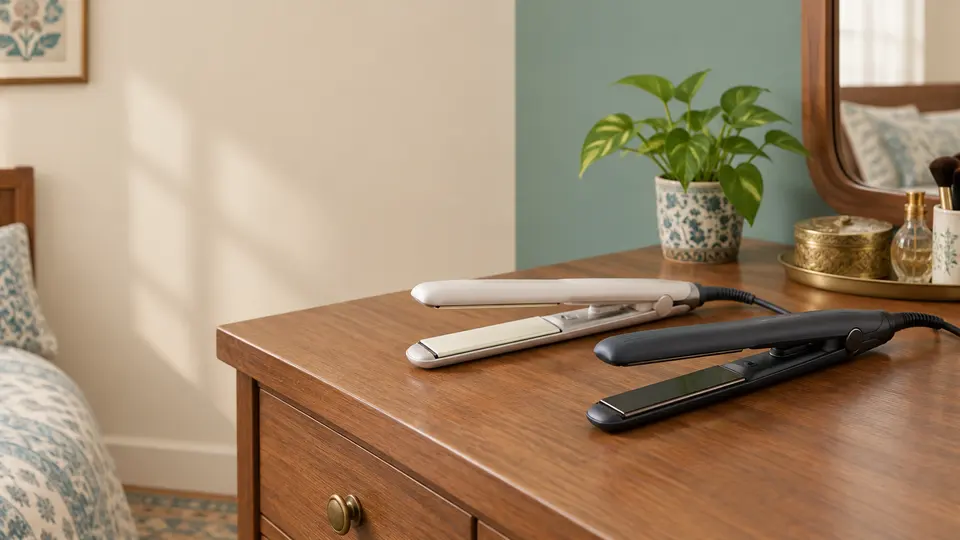
Havells HS4222 with five settings
A temperature ceiling is only useful if the iron can be set below it. Havells lists five settings from 150 C to 230 C and a digital display on the HS4222, so fine hair can sit on a lower step.
The plates are ceramic and keratin infused, and they are wide floating plates.
Havells also lists a plate lock and a swivel cord that turns through 360 degrees. Plate size is stated for this model alone, at 40 x 100 mm.
The highest Davines ceiling, for thick, coarse hair, converts to about 232 C. The top setting on the HS4222 sits just under it, though the conversion is arithmetic and not a figure from either brand.
No wattage or heat up time is listed by Havells for this model.
Havells HS4101V and the fixed maximum
It is a basic ceramic coated model. Havells lists floating plates, a plate lock and a swivel cord, and says it is ready in 14 seconds. Heat up time is given for this model and for no other of the three.
Havells lists a single maximum of 210 C and no settings, so the specification gives no way to lower the temperature for fine hair. No plate size or wattage is given either.
The plain ceramic wording appears only on the HS4222, and the HS4101V carries the words ceramic coated, which matter given the Davines remark about coated irons.
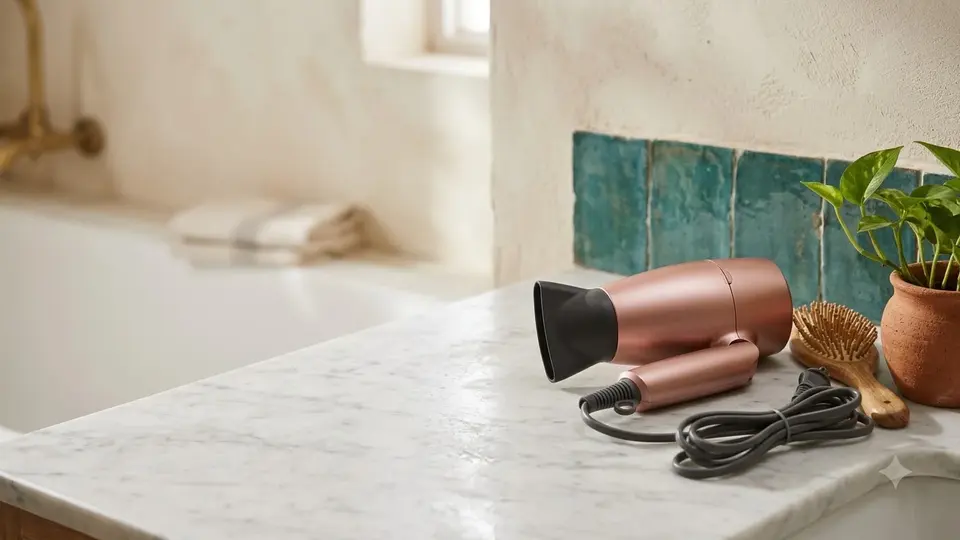
Philips BHS530/00 and its claims
The 5000 series BHS530/00 is described by Philips as having advanced ceramic floating plates, without saying whether the ceramic is a coating. Other Philips 5000 series models list NourishCare serum, SilkProtect and ionic care but name no plate material.
No temperature range or settings appear for this model, and no heat up time. Philips lists ThermoShield technology and 2x ionic care.
The brand claims 50 percent faster straightening and 35 percent smoother floating plates, and these are its own figures. A warranty of 2 years is stated, the same as on both Havells models.
A footnote claims a comparable styling result at 180 C on this model against 210 C on the HP8361, and that is a claim by Philips. Availability is not stated for this model.
Ceramic wording on Indian models
The wording differs from brand to brand for what looks like the same material. Havells says ceramic coated for one model and ceramic heating plates for the other, and none of the pages checked explains these terms.
Five Philips pages describe ceramic plates infused with keratin and titanium, namely the BHS397/00, BHS397/40, BHS393/40, BHS736/00 and BHS738/00. The BHS393/40 page says ceramic plates infused with titanium.
Titanium on older Philips models
The only titanium wording on the Philips India pages belongs to older models that are marked discontinued or no longer available.
Philips listed the BHS397/00 with two temperature settings and a 60 second heat up, which shows how that titanium infused line was specified.
Dyson plates and airflow
The Dyson India range sits outside the choice altogether. Its Corrale uses flexing copper plates, and its Airstrait has no hot plates and uses heated airflow.