thermal wear for kids: A good place to start is the Jockey Juniors KT02, a cotton rich full sleeve thermal top and the only one of the four with age bands. The Rupa Thermocot is the set for mild cold, and the Lux Cozi Longs is plain cotton, not a thermal. This is general information only.
Method: specifications and warranty are read from brand pages and Amazon listings, last checked 10 Nov 2026. Nothing here is lab-tested. How we pick. Site facts.
Thermal wear for kids is sold here as cotton base layers, and the fibre line on a listing tells a parent more than the product name does. The word thermal can sit on a garment while its fibre mix stays unstated.
Jockey Juniors KT02: the cotton rich undershirt
StayWarm is described by Jockey as a fabric technology developed to help the wearer stay warm through the day. That description comes from the brand’s thermals collection, which is a women’s range, so it speaks for the technology and is not a test result for this kids undershirt.
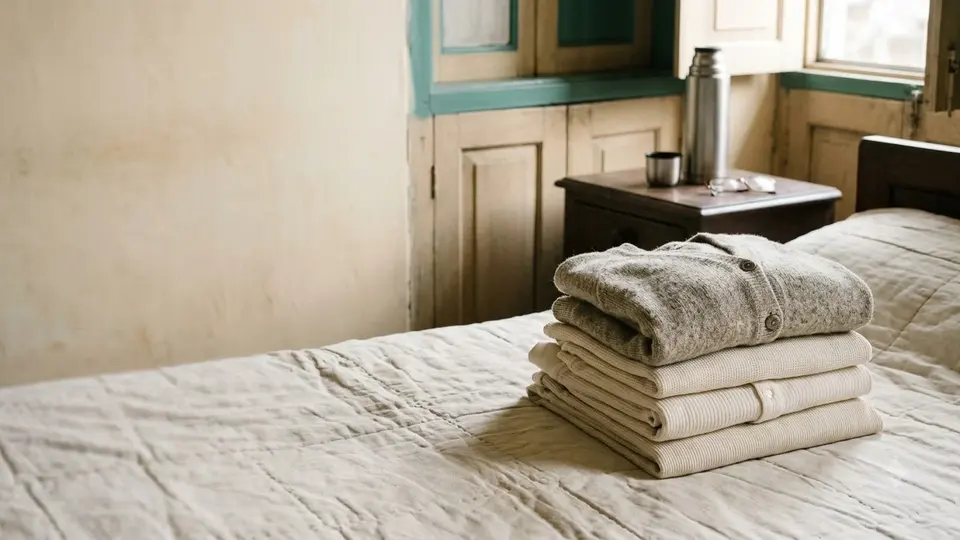
Sizes are offered by age band, and no other garment here carries one. The two bands listed are 9 to 10 and 11 to 12 years, and the BigBasket listing shown is for the 11 to 12 years size. It is sold as a single piece in off white, so the lower half of the outfit is arranged separately.
Two gaps come with it. The retailer listing on BigBasket, which is not a Jockey brand page, gives no fibre percentages and no care instructions. Its cotton rich blend also sits against the clinic advice on cotton.
Base layers in the Penn State advice
Penn State Health Children’s PRO Wellness is the source of the layering advice in this guide, and it recommends separate layers for cold outdoor time. It names a base that moves moisture away from the body, a middle layer that insulates, and an outer shell that blocks wind and moisture.
In the same advice, a base layer sits close to the body, lets air through and dries fast. It is written about children playing in snow, so it is one clinic’s view and not a rule for school days in India.
A thermal top or set covers only the first of those layers. A sweater, a fleece or a jacket goes on top for the colder mornings.
Penn State on cotton and wicking
Synthetic fabrics or wool are advised by Penn State instead of cotton, since cotton soaks up moisture and is slow to dry. For thermal underwear it goes further, saying long johns work only when they wick moisture and are not cotton.
Three of the four garments here are cotton or cotton rich, so they sit directly against that advice. Only the Rupa Jon states no fibre.
Mild cold and indoor school days are not discussed by the clinic, so it neither supports nor rules out cotton for them. A child outdoors for long spells in damp weather is closer to the clinic’s case than a child who walks from a car to a classroom.
Nothing Jockey, Rupa or Lux publish for these four speaks to sensitive skin, and a skin condition is a question for a doctor.
Thermocot set and Jon top from Rupa
The Thermocot is a thermal set for boys from Rupa’s Thermocot line, in plain cotton. It suits mild cold better than a cotton rich layer with a fleece backed finish, and a set covers both halves of the outfit.
Its title gives no fibre percentage and no age or size band. Only the product title is available as a source for it.
The Rupa Jon is a thermal round neck full sleeve top in a regular fit, in brown. Its title states no fibre blend, size chart or care instructions.
A round neck sits low under a school shirt collar. Nothing published shows either Rupa product to be warmer than the other, so the choice between a set and a top rests on what the child already wears below the waist.
Lux Cozi Longs: a lower garment in cotton
This garment carries no warmth claim from Lux, and it is a lower piece and not a thermal. It may be displayed beside thermals elsewhere, but the Lux product page carries no such claim.
Lux sells the Cozi Longs through its own site, luxinnerwear.com. Its fabric is 100 percent cotton soft interlock. Lux also names a double layered contoured pouch and a waistband that takes up moisture and reduces rubbing.
The size chart cannot be read in the product page text, and no care instructions are stated. Like the other cotton garments, it sits against the clinic advice on cotton.
Pairing it with a thermal top is possible, though Lux does not say it is meant for that use. Where a child already owns a warm top and only needs a plain cotton lower layer, it is the one garment of the four that fits that gap.
Juniors KT02 Kids Super Combed Cotton Rich Full Sleeve Thermal Undershirt
Super combed cotton rich fabric (name only, no percentages)
StayWarm treatment in product title
Pack sizes listed for ages 9-10 and 11-12
SuitsA cotton rich full sleeve thermal top for a school age child.
Keep in mindA retailer listing on BigBasket, not a Jockey brand page, gives no fibre percentages or care instructions, and cotton rich fabric sits against Penn State cotton advice.
SuitsA plain cotton layer for mild cold, rather than a thermal fleece.
Keep in mindLux makes no thermal claim; the size chart is unreadable, no care steps are stated, and its 100 percent cotton sits against Penn State advice on cotton.
Search on Amazon India Opens an Amazon India search for this model. Price and offers are shown there.
As an Amazon Associate I earn from qualifying purchases. Read the disclosure.
Kids base layers at a glance, with the place to start first
Product
Fibre statement
Form
Age band
Jockey Juniors KT02 (start here)
Super combed cotton rich
Full sleeve undershirt
9 to 10 and 11 to 12
Rupa Thermocot
Plain cotton
Thermal set for boys
Not stated
Rupa Jon
Not stated
Round neck full sleeve top
Not stated
Lux Cozi Longs
100% cotton interlock
Long, not a thermal
Not stated
Model Benchmark
4 verified models compared
4 verified models compared
4 verified models compared
What the four listings name
Jockey names cotton rich fabric, a StayWarm treatment, two age bands and a single off white piece. Rupa names plain cotton for the Thermocot set and no fibre for the Jon top, whose title gives a round neck, full sleeves, a regular fit and the colour brown.
Lux names 100 percent cotton soft interlock, a contoured double layered pouch and a waistband that takes up moisture. Rupa publishes little beyond the garment title, so most of what is known about its two garments comes from the titles.
Label details that settle more than the name
These are quick to read in a shop or on arrival.
Fibre content, ideally with a percentage for each fibre.
The age band or size, matched to the child’s current clothes.
Care instructions, since a thermal is washed often.
Whether the garment is a top, a lower piece or a set.
None of the four comes with all of these published online. Jockey gives the age band, Lux gives a fibre percentage, and the Rupa titles give the form.
Reading the fibre line on a label
A named fibre with a percentage tells a parent more than the word thermal. Among the four, only Lux gives a percentage, which is 100 percent cotton in an interlock fabric.
Jockey says cotton rich and gives no split. The Rupa Thermocot says plain cotton and gives no figure.
Words such as thermal, warm or winter can sit on a product while the fibre mix stays unstated, and the Rupa Jon title is an example. The label on the garment itself is where a parent can confirm the blend.
Age bands and fit
Each brand sets its own age bands, and only Jockey publishes them for these garments. The Rupa Jon title says regular fit, and the other two leave the size to a chart on the product.
Closeness to the body is the aim of a base layer, according to the Penn State advice. A top that is loose lets cold air in at the cuffs and the hem, and one that is tight on the shoulders or under the arms is uncomfortable for a growing child.
A full sleeve cut covers the arms down to the wrist, and a growing child may outgrow the sleeve length before the body of the top gives out.
For a child at the boundary between two bands, the current top can be compared against the new garment on the day it arrives. Keeping the label intact leaves room for an exchange. A note of the size bought, kept with the receipt, makes a later reorder for the next winter simpler.
Set, single top or a mix
A set suits a child who needs both halves of the layer and has nothing suitable at home. A single top suits a child whose lower half is already covered by trousers or leggings that are warm enough.
Only the Rupa Thermocot is sold as a set here. The Jockey KT02 and the Rupa Jon are tops, and the Lux Cozi Longs is a lower garment on its own.
Families with two children of different ages face a further limit. The Jockey bands stop at 11 to 12, which leaves a younger sibling to be matched with another product, and Rupa publishes no band at all.
Checking a garment on arrival
A short check on the day a thermal arrives costs little and keeps the exchange option open.
Holding the new top against one the child already wears shows the sleeve length and the body length side by side. The fibre line on the label can then be read against the product name, and any difference is easy to spot while the packaging is still on hand.
A child who tries the top on over a vest or a school shirt shows quickly whether the neck and the cuffs sit flat. Washing once, following the care label, shows whether the fit changes before the garment goes into the school week.
Washing and care
Jockey advises following the care label or the brand site, washing gently with the garment inside out, drying on a line in the shade and keeping strong chemicals away.
That advice sits on a women’s thermals collection, so it speaks for the brand in general and was not written for kids garments. The label stitched into each garment is the instruction that applies to it, and none of the four garments comes with care steps of its own online.
Frequently asked questions
How should a kids thermal top be washed?
Gentle washing with the garment turned inside out, line drying in the shade and no strong chemicals is the pattern Jockey gives for its thermals. The care label on the child's own garment comes first.
Is cotton a good fabric for a child's base layer?
Cotton absorbs moisture and dries slowly, so Penn State Health advises synthetics or wool for children playing in snow. That advice is written for snow and does not cover ordinary school days.
How many layers does a child need in the cold?
Three layers are suggested by Penn State Health for cold outdoor time, which are a base, a middle layer and an outer shell. A thermal top or set provides only the base.
Is a thermal set better than a single top?
A set puts a top and a lower garment in one purchase, while a single top leaves the lower half to be bought separately. No source shows either form to be warmer, so the choice depends on what the child already owns.
WinterBuying decisionBest Winter Jacket for Kids in India: Fill, Rain and ZipsThe Marks and Spencer Stormwear padded jacket is the pick, with a recycled polyester filling, a shower proof finish and an age range of 2 to 16. A synthetic or padded jacket suits daily school wear better than down, and the hood is the first place to look for drawstrings, which the US CPSC treats as a hazard. The Quechua hiking jacket comes last, as no fill is named.4 products compared · 5 min read→WinterTop picksBest thermal wear for women in India: fibres and fitUniqlo HEATTECH Ultra Warm is the pick, the only top here with a stated temperature band, in a crew neck that stays low under a kurta. The Quechua BL500 suits a reader who wants a named fabric, brushed fleece, and the Wedze turtleneck suits a higher neck. The Wedze top made without seams comes last.4 products compared · 7 min read→WinterTop picksBest thermal wear for men in India: fabric and warmth guideThe Quechua BL500 turtleneck from Decathlon is the pick, the one top here that names its fibre and states a fabric weight. Uniqlo HEATTECH Ultra Warm suits a reader who wants a stated temperature band, and the Wedze BL100 comes last, as it gives no fibre, weight or band, so its label needs a close read.4 products compared · 7 min read→WinterBuying decisionBest Immersion Water Heater for Bucket in India: Safe RodsThe Havells HB 15 comes first among four 1500 W rods, since Havells states an ISI mark and a two year warranty for it. Only the Usha IH 2415 lists a thermostat, and the Crompton comes last because its details come from a range wide collection. No brand gives a bucket size in litres.4 products compared · 5 min read→WinterTop picksBest Thermal Wear for Elderly Parents in IndiaThe Kosha merino top is where to begin for a father who wears natural fibres, and the Jockey top is the only women's cut here, for a mother. Rupa and Lux Cottswool are described only by their titles, and the Lux details call its top an undershirt. This is general information, not medical advice.4 products compared · 7 min read→