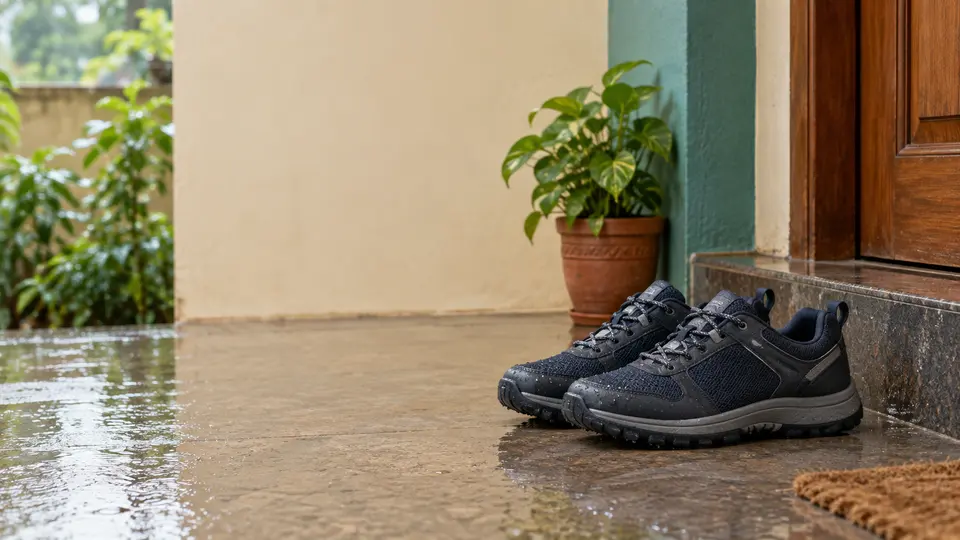
These shoes are for a commuter who walks wet pavements and station steps in a monsoon city, and the claim word on each listing is the detail to read first. Waterproof, water resistant and weatherproof are not the same thing, and Columbia, Decathlon and Puma word the claim differently for the best shoes for rainy season, with the outsole description coming next.
Columbia Crestwood Waterproof: bootie and outsole
Omni Tech is described as a waterproof, breathable, seam sealed bootie construction, and the outsole is Omni Grip, a non marking traction rubber. Neither of the other two shoes matches that on paper.
The black pair has a leather, mesh and webbing upper over a Techlite cushioned midsole. It weighs 360 g per shoe in size 9, the fit is listed as wide, and the country of origin is India. Its stated use is hiking and not office wear.
One detail contradicts itself. Columbia’s title reads Water Resistant Shoes, while the feature list describes the waterproof bootie. The waterproof description is treated here as the brand’s own statement and not as a settled fact.
Its care line is short, a wipe with a damp cloth. The pair suits a commuter who wants a sealed waterproof bootie and a grippy rubber sole in a lower profile hiking style shoe.
Quechua MH100: studs and warranty
Decathlon sells the MH100 as a hiking and trekking shoe, and calls it waterproof without naming a membrane. The outsole is non slip with 4 mm grip studs, and the cut is mid ankle, which keeps splash off the ankle.
Sizes run from 5.5 to 12, and two colours are listed. Decathlon Sports India sells and fulfils the order.
No waterproofing technology, upper material or weight is named for it. A low ankle MH100 is also sold by Decathlon, though only its name appeared in the text read. The studded outsole and the mid ankle cut are what a commuter would pick this pair for.
Decathlon shows a similar inconsistency elsewhere. In its monsoon category, the women’s NH100 is named waterproof while the web address for the same product says water resistant.
Puma Basket Classic Weatherproof in nubuck
The pair has a nubuck upper and a rubber midsole and outsole. Weatherproof is the word Puma uses for the nubuck, and nothing in its text claims the pair is waterproof.
A closure, a grip pattern and a care routine are not stated, and no sizes appear. The one colour listed is Taffy, shown as sold out. The care section sends the reader to a general Shoe Care page. A commuter who likes a plain sneaker look and expects rain to mean drizzle and wet floors is the one this pair is written for.
The three pairs at a glance
Columbia states a waterproof bootie and an Omni Grip non marking rubber outsole, with no ankle height. Quechua states a waterproof shoe with the membrane unnamed, a non slip outsole with grip studs and a mid ankle cut.
Puma states a weatherproof nubuck upper and a rubber outsole with no grip pattern, and it gives no ankle height either.
Hiking wording on city shoes
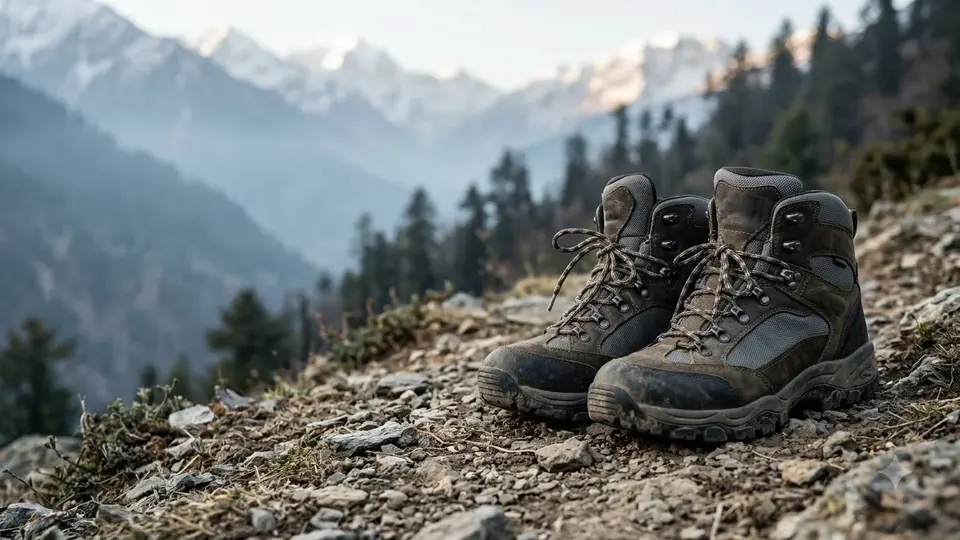
Two of the three pairs are sold as hiking shoes. Columbia gives hiking as the stated use of the Crestwood, and Decathlon sells the MH100 as a hiking and trekking shoe.
For a commute the label raises a question, since Indiahikes says light hiking shoes are meant for warm, dry weather and not for the rainy season. Its trekking category is the one written for snow and rain.
Neither the Columbia nor the Decathlon text places its shoe in either of those groups. The waterproof claims on each pair are the stronger guide to wet weather use than the hiking label itself.
The Puma stands apart as a plain sneaker, and its single word, weatherproof, is a milder claim than either of the others. That milder claim fits shorter, lighter exposure to rain.
Four points that separate rain shoes
Monsoon commutes in cities such as Mumbai, Gurgaon or Bengaluru mean wet pavements every morning, and the product details for rain shoes vary a great deal. Four points separate one rain shoe from another:
- The name of the claim, whether waterproof, water resistant or weatherproof.
- Whether a construction is named, such as a sealed bootie, or whether the label stands alone.
- The outsole wording, and whether it describes grooves, studs or only the word rubber.
- Whether a weight, a size run and a care line are printed.
On these four points Columbia is the most complete, with a named bootie, a named traction rubber, a weight and a care line. Quechua names studs and sizes, and Puma names a rubber outsole with little else beyond the nubuck upper and a single colour.
Waterproof, water resistant and weatherproof
Puma India states on its rain shoe pages that water resistant and waterproof are different things. Its Basket Classic text adds a third word, weatherproof.
Columbia is the most specific of the three brands, and Decathlon names no membrane for the MH100, so that label cannot be explained further.
Indiahikes writes about trekking and not about city commuting, but its advice gives general context. It prefers water resistant shoes to fully waterproof ones, since heat and sweat stay inside a waterproof shoe.
It also says light hiking shoes suit warm, dry weather and are not meant for the rainy season, while trekking shoes are built for snow and rain. Both the Columbia and Quechua pairs use hiking wording, so the label alone does not show which category a pair belongs to.
Matching the claim to the commute
A commute through standing water is the case a sealed bootie is written for. Columbia is the only brand of the three that names such a construction.
Light drizzle that ends in a dry office is the case a weatherproof nubuck sneaker is written for. Puma pitches the Basket Classic with that single word.
Between the two sits the Quechua MH100, with a plain waterproof label and a mid ankle cut. Whether the construction keeps out a puddle cannot be read from Decathlon’s text, as no technology is named.
Breathability is the other half of the decision. Indiahikes warns about trapped heat, and Columbia says its bootie is breathable.
Grip as the brands describe it
Deep grooves mark a grippy sole, as per Indiahikes. Columbia lists Omni Grip on the Crestwood, and Decathlon lists studs on the MH100.
Decathlon’s monsoon category also shows the MH500 with 5 mm studs. Stud height therefore differs between models of the same brand, even when both carry the same waterproof label.
Puma’s category copy claims a rubber outsole for grip, but the product cards in that category carry no claim of their own, so it is not credited to the Basket Classic. Puma’s text for the shoe itself says rubber midsole and outsole and states no grip pattern.
No brand gives a slip resistance rating or a test result. Words such as non slip are the brands’ own descriptions of the outsole.
A mid ankle cut, as on the Quechua, looks sportier than a plain sneaker. Neither the Quechua nor the Puma states a weight.
Fit, size and weight
Sizing detail is thin across the group. Columbia says the Crestwood has a wide fit and gives no size run, while Decathlon lists the MH100 sizes and gives no fit advice.
Weight is missing for two of the three pairs, so a heavier hiking style shoe cannot be set against the Puma sneaker on weight. The 360 g figure for the Crestwood is the one number that exists to compare.
Seam sealing is part of the Columbia description. Decathlon and Puma name no construction of that kind, so the Quechua and the Puma give no sentence on where water could enter.
Grip in a hiking style shoe comes with trade offs in looks and weight, and Columbia places the Crestwood in hiking use. For an office commute that matters more than it does on a trail.
Warranty and return terms
Decathlon is the only brand of the three to state a warranty. The MH100 comes with 2 years of warranty and 30 days for return, exchange and replacement.
The return window covers exchange as well as refund, so a pair that fits badly can be swapped for another size within those days. Decathlon does not list what the warranty covers.
Columbia carries no warranty line. Puma mentions free returns within 10 days of delivery on qualifying orders, and that is a store term and not a product claim.
Drying and cleaning rain shoes
Each brand gives care advice in a different place. Columbia puts its wipe clean instruction on the Crestwood text, and Decathlon gives no cleaning steps for the MH100.
Puma India gives care tips for rain shoes in general. They are to clean after use, to apply waterproof spray again, and to store shoes away from sunlight.
A separate Puma page on waterproof sneakers says wet shoes should lose their insoles and be aired out overnight.