In India, shoes for a first Himalayan trek of five to seven days, such as Kedarkantha in winter or spring, are sold mostly through Decathlon’s Quechua range and the Columbia India site. The best trekking shoes there are listed as men’s models, with descriptions that use the words hiking and trekking together and a rain claim worded as waterproof or as water resistant. No pair is a clear answer for every route, since the brands differ on what they state.
Quechua MH500: studs, sizes and warranty
Decathlon describes the MH500 as a mid ankle hiking and trekking shoe with cushion comfort and 5 mm grip studs, and calls it waterproof without naming a membrane.
Sizes run from 5.5 to UK 12, which Decathlon gives as EU 47, and two colours are offered, brown and grey. A 2 year warranty and 30 days for return, exchange and replacement come with it.
That makes it the pair with the most stated points for a first time trekker. Mid ankle support, studded grip and a return window that allows the break in are all stated.
Upper material, weight and membrane are not stated, and Decathlon gives no fit advice. It links a size chart without saying whether the pair runs small or large, so the size advice here comes from Indiahikes.
Trekking, hiking and sports shoes
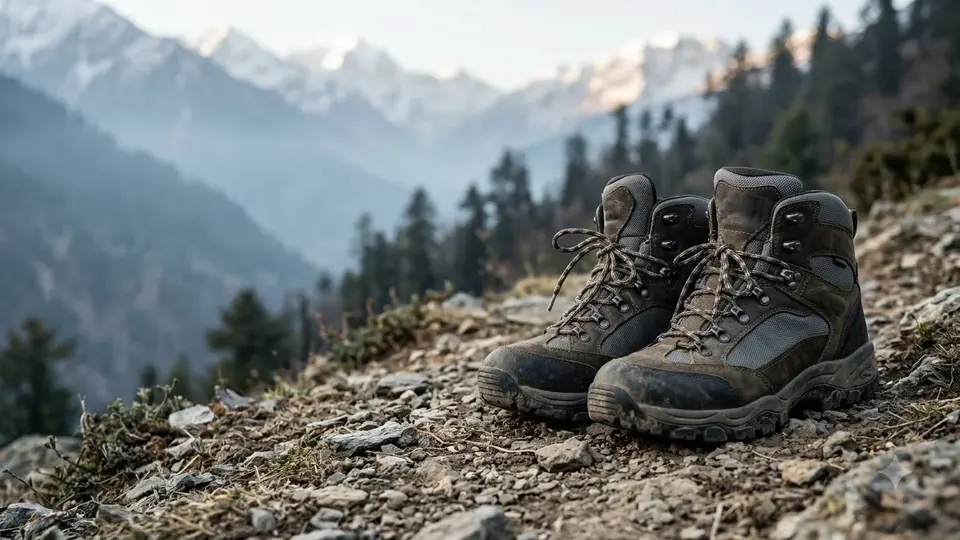
Indiahikes separates the three types by terrain and load. Hiking shoes are light and flexible, and they suit day or weekend hikes in warm, dry weather. They are not suited to the rainy season, according to the same article.
Trekking shoes are the type for longer treks, snow, rain and backpack loads of 7 kg or more. A first time trekker with a pack at that weight is the reader this comparison has in mind.
Ankle support is the other dividing line. Indiahikes says Himalayan terrain makes ankles prone to twisting, and it describes trekking shoes as giving more support than hiking shoes while weighing more.
Sports shoes sit outside both groups.
Waterproof or water resistant
Indiahikes favours water resistant shoes over fully waterproof ones, since sweaty feet are the result when a waterproof trekking shoe does not let them breathe. Its article is the only source here that argues the point.
Brand descriptions are less consistent: Decathlon names the NH150 waterproof, while its web tags say water resistant, and it describes the MH500 as waterproof without naming a membrane.
Columbia is more specific and describes Omni Tech as a waterproof, breathable, seam sealed bootie construction, and the Newton Ridge Plus II carries that wording.
A trekker who follows the Indiahikes preference would look at the NH150, as it is the one pair with a water resistant label anywhere. A trekker expecting wet or muddy trail sections has the Columbia bootie to consider.
Columbia Newton Ridge Plus II: weight and bootie
It is the alternative for a route with stream crossings or mud, since Columbia names a seam sealed bootie. The black pair combines a PU coated leather, suede and mesh upper with a Techlite midsole. The sole is Omni Grip traction rubber, and Columbia recommends it for hiking and trekking.
Weight is 452 g per shoe in size 9. Compared with the Columbia Crestwood, listed at 360 g in the same size, it is heavier.
Ankle height is not stated for it, which makes it the one pair here with no stated ankle cut. Care is a wipe with a damp cloth.
Columbia calls the pair a durable, lightweight hiking boot. Lightweight is the brand’s word, and the weight figure is the measure a trekker can set against it, while Indiahikes reserves its lightest category for hiking shoes in warm, dry weather and describes trekking shoes as the heavier type.
Quechua NH150 and its conflicting description
The NH150 is a mid ankle support shoe from the same Quechua family, with sizes 5.5 to 12 listed, the same run as the MH500, and a 2 year warranty. It suits a first time trekker who prefers the water resistant approach that Indiahikes recommends.
Two details in its description disagree. The product name says waterproof and the web tags say water resistant, and the colour field says Grey while the title and tags say Beige.
No grip, upper or weight details are given for it, which leaves little to compare against the MH500.
Size and break in against the return window
Indiahikes recommends one size above the usual, which keeps toes from rubbing and avoids blisters. No brand here gives a size conversion, so a brand’s own chart settles the final size.
New shoes need around two weeks of wear to break in, as per Indiahikes. That period has to fit inside whatever return window the seller allows. An order placed a few days before departure leaves no room in that arrangement.
Decathlon allows 30 days for return, exchange and replacement on both Quechua pairs, so the break in uses roughly half of the window and leaves the second half for an exchange to be requested and delivered. Columbia states no return window in its product text, and both Quechua pairs carry the same warranty and return terms.
Reading a hiking and trekking label
Both Quechua descriptions use the combined wording hiking and trekking, and Columbia recommends the Newton Ridge Plus II for both uses. A combined label does not place a pair in the trekking group that Indiahikes describes.
Ankle cut is one feature that helps, and both Quechua pairs are mid ankle while Columbia does not state ankle height at all.
Grip wording is another. Quechua lists the MH500 studs, Columbia names an Omni Grip traction rubber outsole, and the NH150 gives no grip detail.
Weight is the other number worth reading, and only the Columbia states one for a trekking pair, 452 g in size 9.
Indiahikes offers a way to read any sole, which is to tap it with a metal key. A dull sound means the rubber is soft enough, and a sharp sound means it is too hard for trekking.
Choosing by route
On a dry, cold route with a long climb, weight and ankle support come first. Both Quechua pairs state a mid ankle cut, so only Quechua answers the ankle question directly.
Stream crossings or mud put the rain claim first. Columbia states a sealed bootie, the NH150 gives mixed signals, and the MH500 carries a plain waterproof label.
Time before departure is a third case, and the break in schedule above is the part that can be planned around the return window.
Winter routes are a separate case, as Indiahikes ties trekking shoes to snow, and the Quechua pairs carry no temperature rating, sole hardness or weight.