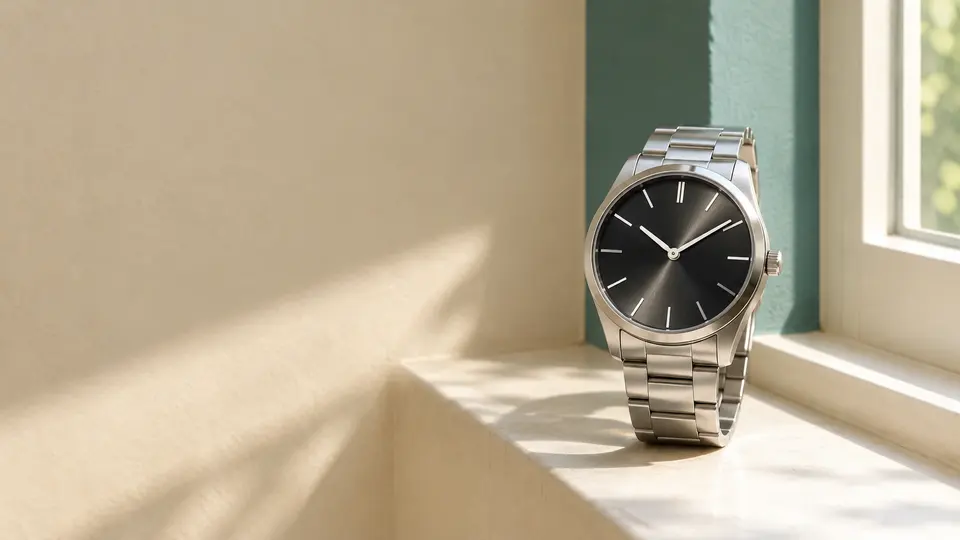
best solar powered watch for men india: The Citizen AW1524-84E is the pick, an Eco Drive watch rated to 10 ATM and the only one of the five with a published case size. The Citizen BL8160-58L is the alternative for a second time zone, and the Casio MTP-S110-2AVCF for a day and date window. The two Seiko models are placed last, as little beyond solar power and a steel band is stated for them.
Method: specifications and warranty are read from brand pages and Amazon listings, last checked 10 Nov 2026. Nothing here is lab-tested. How we pick. Site facts.
Five solar watches publish very different amounts of detail, and a single one of them gives a case size, a water rating and a warranty term. The best solar powered watch for men in this group is therefore settled by the published figures, while the charging advice comes from Citizen’s support page for its Eco Drive system.
Citizen AW1524-84E: size, water rating and warranty
Far more is published for this Citizen than for the other four. It has a black dial under mineral glass, and its stainless steel strap is 20 mm wide.
The dial measures 47 mm across and 11 mm thick, which is a large watch. A man with a slim wrist may find it more case than he wants.
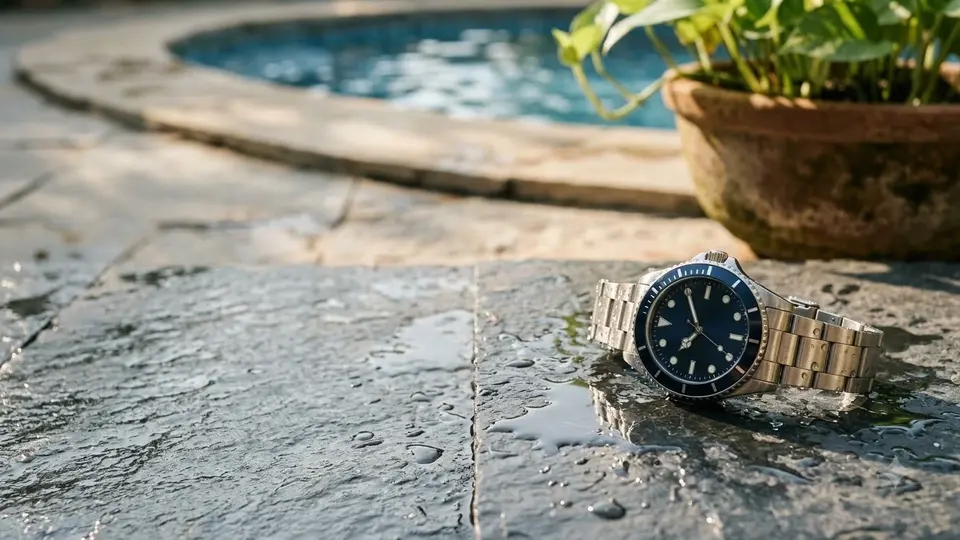
Water resistance is 10 ATM. A chart from Watch Scanning says 3 ATM is enough for rain and handwashing but not for swimming, so this Citizen sits in a different group and suits a man who wears his watch near water.
Citizen states a manufacturer warranty of 36 months for it. No warranty term is given for the other four.
These details come from Just In Time, a retailer, and not from Citizen India. The retailer contradicts itself on one point, as its specification table calls the movement quartz while its description calls it Eco Drive. Its FAQ also gives a size range that differs from the 47 mm figure.
No charging time is published for this model, so the charging times further down are the general ones for Eco Drive and not a result for this watch.
The BL8160-58L and the Casio Tough Solar
A second time zone is the reason to look past the pick. The Citizen BL8160-58L is an Eco Drive watch with a Perpetual GMT function, a blue dial and stainless steel, and no other watch in the group has that function.
It suits a man who works with colleagues abroad or travels often. Water resistance, case size and charging time are not published.
Eco Drive is the shared system with the pick, so Citizen’s charging and storage guidance describes its system, though not this watch in particular.
Casio sells the MTP-S110-2AVCF as a Tough Solar watch for men with a day and date indicator. It matches a man who wants a Casio solar analog with that window for daily wear.
Case size, water resistance and strap material are not stated for it. Citizen wrote its charging guidance for its own watches and does not describe Tough Solar, so the charging times in this guide do not carry over.
Seiko SNE471P1 and SSC717P1
Both are sold as solar watches in stainless steel. No case size, water rating or charging time is given for either.
The SNE471P1 has a stainless steel strap. Its companion has a stainless steel bracelet in silver.
One description of the SSC717P1 is in doubt. A UK retailer calls it a solar chronograph, while it is sold in India as an analog watch, and the two descriptions disagree.
Citizen AW1524-84E Men Eco-Drive Black Dial Analog Stainless Steel Watch
47 mm dial, 11 mm thick, mineral glass
Stainless steel strap, 20 mm wide
10 ATM water resistance; 36 months manufacturer warranty
SuitsMen who want a higher rated analog for swimming and water sports and do not mind a large dial.
Keep in mindThe retailer, Just In Time, says quartz in its table and Eco Drive in its description, and its FAQ size range differs from the 47 mm figure.
Search on Amazon India Opens an Amazon India search for this model. Price and offers are shown there.
Seiko Solar Men's Analog Watch with Stainless Steel Bracelet SSC717P1
Solar, per the listing title
Analog, per the listing title
Stainless steel bracelet in silver, per the listing title
SuitsA man who wants a Seiko solar analog with a steel bracelet and a silver finish.
Keep in mindDetails come only from the seller title, and a UK retailer's solar chronograph label for it conflicts with the analog description and is not used.
As an Amazon Associate I earn from qualifying purchases. Read the disclosure.
Solar watches by system, dial and water rating, with our pick first
Model
Solar system
Dial type
Water rating
Citizen AW1524-84E (our pick)
Eco Drive
Analog with black dial
10 ATM
Citizen BL8160-58L
Eco Drive
Perpetual GMT with blue dial
Not stated
Casio MTP-S110-2AVCF
Tough Solar
Analog with day and date
Not stated
Seiko SNE471P1
Solar
Analogue with steel strap
Not stated
Seiko SSC717P1
Solar
Analog with steel bracelet
Not stated
Model Benchmark
5 verified models compared
5 verified models compared
5 verified models compared
Charging times for Eco Drive
Citizen describes Eco Drive as a system that converts any light, natural or artificial, into usable energy. Direct sunlight is the most efficient source, and indoor light also works, only more slowly.
On a sunny day outdoors, a couple of minutes of light is enough for one day of use, as per Citizen, and nearly 11 hours brings the watch to a full charge.
Indoors, the requirement grows sharply: under a 30 W fluorescent light about 8 inches away, Citizen gives around 40 minutes for one day of use and around 130 hours for a full charge.
Both sets of figures describe Eco Drive. They are not charging times for the Casio Tough Solar or the Seiko models.
The indoor figure was measured at a close distance. A ceiling light several feet above a desk is farther away, and Citizen gives no figure for it.
Storage in a drawer or a dark office
A fully charged Eco Drive keeps running for at least six months in total darkness, as per Citizen. That reserve helps a man who takes the watch off for a long trip.
Citizen also warns that a long spell in the dark can damage the energy cell. A drawer is a risk for a watch stored for many months, even one that was fully charged at the start.
When the stored charge runs low, the hands pause to save energy while the timekeeping circuit keeps running. ODS Jewellers says in its Eco Drive guide that the hands return to the correct time once light restores the charge.
A watch that has stopped in this way has not failed; it needs light.
Per the same guide, the solar cell lasts as long as the watch does. It gives two conflicting lifespans for the rechargeable capacitor, and neither figure is repeated here.
Solar and battery quartz compared
Routine matters more than brand in this choice. A solar watch removes battery changes, and in return it needs light to reach the dial on a regular basis.
A man who wears the watch on most days gives it regular light on the wrist, and for him the saving is real. The battery never has to be bought or changed.
Another man may keep several watches and wear each one only now and then, which is the opposite case. A solar watch left off for weeks will use up its reserve, while a battery quartz can sit unused for a long time without any concern about light.
For a solar watch worn only occasionally, a spot near a window when it is off the wrist keeps the cell supplied. The reserve figure from Citizen is a ceiling for any single watch left in the dark, so a rotation of several solar watches gives each one some light every few weeks.
Light habits that keep the watch running
A watch that has paused needs bright light, and the hands then return to the correct time. Citizen gives longer indoor times for a full charge than outdoor ones.
Outdoor light is many times stronger than room light, so a few minutes near a window or on a balcony does more for the cell than a full day under indoor lamps.
Frequently asked questions
Does a solar watch need direct sunlight to charge?
No, a solar watch also charges under window light and lamps. For Eco Drive, Citizen says direct sunlight is the most efficient source and indoor light works at a slower rate.
How long does a solar watch run in the dark?
Citizen puts the reserve of a fully charged Eco Drive at six months or more with no light at all. The Casio and Seiko models here have no equivalent figure published.
Can a solar watch be left in a drawer?
A drawer is risky for months at a time. Citizen says a long spell in the dark can damage the energy cell of an Eco Drive, and a spot near a window avoids that.
What happens when a solar watch charge runs low?
The hands on an Eco Drive freeze to conserve power while the circuit keeps counting time. After fresh light they move back to the right time, as a jeweller's guide explains.
WatchesTop picksBest analog watches for men in India: 4 for office wearThe Titan Edge 1595WL01 is the pick, the thinnest of the four at 3.60 mm, which matters most under a formal shirt cuff. The Casio Enticer is the steel bracelet alternative, and the Seiko 5 Sports is placed last for cuffs, as the thickest watch with an automatic reserve shorter than a weekend.4 products compared · 6 min read→WatchesTop picksBest Waterproof Analog Watch for Men in IndiaThe Seiko 5 Sports SRPK29K1 is the pick, a 10 ATM automatic with a 38 mm case and a 36 month warranty, and the Titan Edge 1595SL03 ranks last. A 3 ATM label covers rain and handwashing, 5 ATM suits surface swimming in cool water, and 10 ATM covers swimming and snorkelling.5 products compared · 7 min read→WatchesHow to chooseHow to choose a watch in India: strap, rating and movementMatch the strap to daily water exposure first, read a water resistance label as a light splash limit and not a depth, and pick quartz or automatic by how often the watch is worn. Of the three examples here, the Titan Karishma on steel fits wet days best.3 products compared · 4 min read→WatchesTop picksBest easy to read watch for elderly parents in India: 6 picksThe Casio MTP-1314D-2AVDF is the pick, since it is the only watch here described as having large numerals, on a steel bracelet with hands and a date window. No source gives a numeral height, and the case is large for a light wrist. The Casio W-221H-1AV suits a parent who wants an alarm and a backlight, and the Sonata 7954YM01 is placed last because several details are left open.6 products compared · 6 min read→WatchesTop picksBest Watch for Groom in India: Formal Picks for the Wedding DayThe Titan Edge 1595SL03 is the pick for a groom, a quartz watch on leather with the thinnest case of the four. The Timex TWTG10408 is the plainer quartz, the Titan Karishma is the steel bracelet, and the Seiko 5 Sports is placed last for a formal cuff.4 products compared · 6 min read→