Short answerkettlebell: The Lifelong 6 kg kettlebell is our pick for a beginner, with a cast iron body, a textured wide handle and a flat bottom. The Symactive 8 kg adds a vinyl coating for tiled floors, the Jimwalt 8 kg has a neoprene finish, the Lifelong 14 kg suits lifters with some training, and the Domyos 8 kg from Decathlon lists a two year warranty.
Method: specifications and warranty are read from brand pages and Amazon listings, last checked 20 Nov 2026. Nothing here is lab-tested. How we pick. Site facts.
A kettlebell kept in the corner of a flat in India will mostly be used for swings, goblet squats and a few presses, and the weight guide published by Bells of Steel says the right load comes down to training experience rather than body weight alone. The guide calls its own ranges broad sweeps, not prescriptions.
Listings sold in India describe the same kind of bell in very different words. One product name says neoprene while its material field says painted cast iron, and another listing names five separate materials for a single bell.
Weight follows experience and the movement
Bells of Steel, a US equipment brand, says women new to strength and conditioning typically begin with bells between 6 and 12 kg.
For male lifters at the beginner to intermediate stage, the guide names 16 kg and 24 kg among the sizes that work well.
Lifters who have trained before are given 20 kg as a reasonable weight.
The movement matters as much as the person. Hip hinge exercises such as swings and goblet squats handle the most load in the guide, while pressing and overhead work usually call for a lighter bell than the one used for swings.
What each listing says about the coating
The Lifelong 6 kg bell carries the word neoprene in its title, but the feature bullets describe cast iron with a painted surface for durability and corrosion protection. Its material field also says cast iron.
That leaves the neoprene claim in the name in conflict with the rest of the listing. Buyers get a textured wide handle and a flat bottom, and the bell is sold as a single piece.
Symactive, an Amazon brand, describes its bell as cast iron made in one piece without welds, with a vinyl coating that the listing says prevents damage to floors and tiles. The details table names both cast iron and vinyl as materials.
Its listed size differs between the description and the details table. The colour shown is red.
Jimwalt calls its finish half coated neoprene in the product title. The bullets mention cast iron with no welds or seams, and a lead free neoprene finish that the brand says reduces noise and protects flooring.
The details table lists alloy steel, cast iron, high density polyethylene, iron and neoprene as materials, and the same listing covers weights from 2 kg to 48 kg. How much of the bell the coating actually covers is not stated anywhere on the page.
Lifelong 14 kg for lifters with some training
On its own India site, the brand describes this bell as neoprene coated cast iron and places the weight in its intermediate range. On the Bells of Steel ranges, it sits above the starting band given for women new to strength work.
The product page gives no dimensions, warranty or care instructions.
Returns and exchanges are not accepted after delivery, though Lifelong offers a replacement within 7 days for items that arrive damaged, defective or incorrect.
Domyos from Decathlon and its rubber base
Decathlon owns the Domyos name, and the Gym Kettlebell is sold through Decathlon’s India site, and a search for it on the big marketplace turned up no listing. The only material the page names is a rubber base, which the brand says softens impacts.
The listing gives a two year warranty and a 30 day replacement window for the bell. Both terms link out to separate policy pages, and the product page itself shows no dimensions.
Handle feel and the floor underneath
Bells of Steel says consistent handle dimensions and a smooth finish change how a bell feels in the rack position and overhead. Kettlebell Kings treats handle thickness as a matter of personal preference, while saying that smoothness affects grip.
Rogue uses a 33 mm handle diameter across every weight in its competition range, along with the same base diameter, height and bell width for each size.
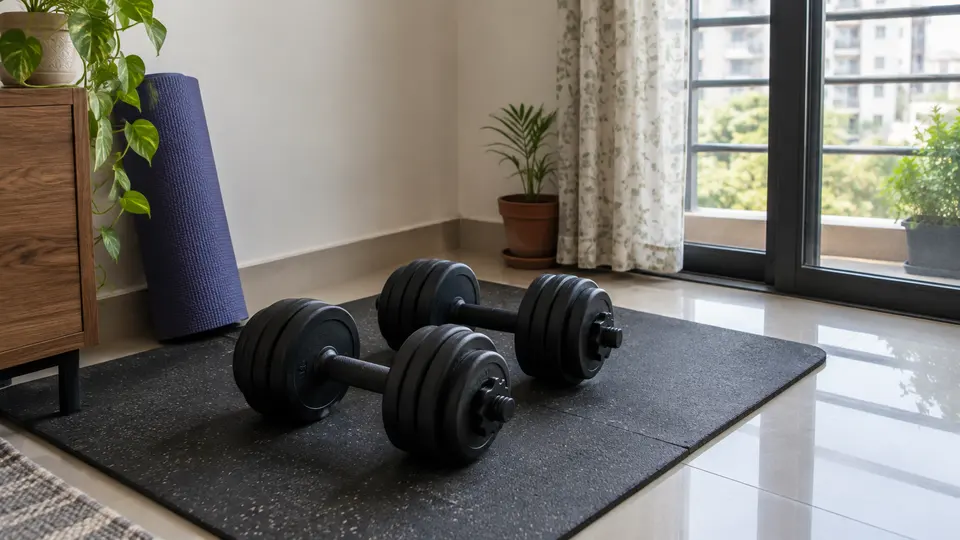
Floors in a flat take the impact of a dropped or set down bell. Kettlebell Kings sells a black rubber mat that is 10 mm thick and one metre square, and the brand says it absorbs the impact of heavy kettlebells to protect the floor beneath.