TSA locks sold in India are mostly three dial combination locks, key locks and cable locks, and the brand pages describe them with very different amounts of detail. A TSA lock for luggage may be listed with its opening method, body material and warranty term, or with little beyond a weight and the approval.
Travel Blue, Samsonite, Tumi and Sea to Summit supply the four locks here, and each brand words its TSA approval in its own way.
The master key at a security check
Tumi describes its lock as TSA recognised, which lets the TSA open it if a security search is needed. The owner keeps the usual code or key for daily use, and the inspector uses the master key.
The TSA says on its travel tips blog that it worked with several companies to develop locks that officers open with a universal master key, so the lock does not have to be cut. When a locked bag cannot be opened by other means, the agency says it may have to cut the lock.
As per the same post, cutting a lock on a soft sided bag does not damage the zippers or zip pulls. The TSA states that it is not liable for damage to a locked bag that has to be opened for security purposes, and an officer who opens a bag leaves a Notice of Baggage Inspection inside it.
Travel Blue TB-036: materials and approval
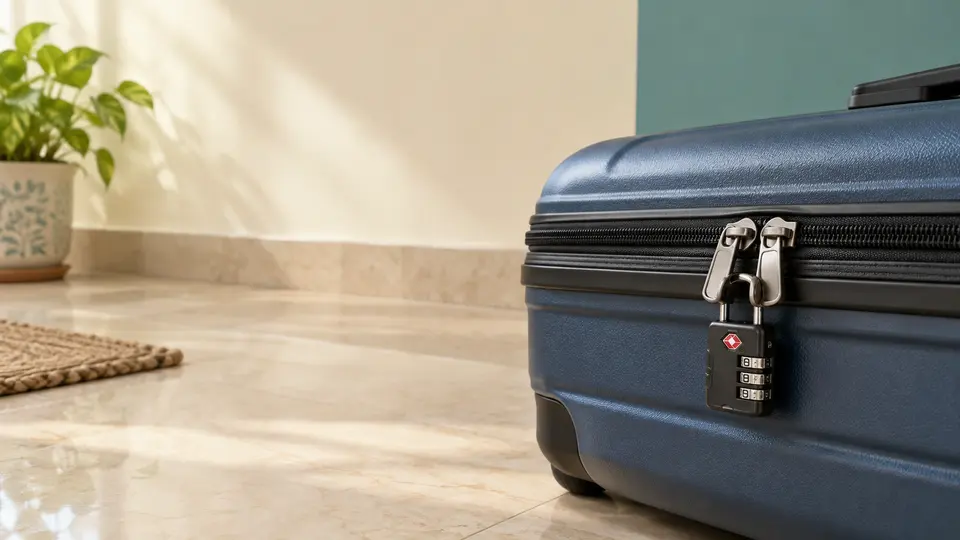
The TB-036 is a three digit combination lock, and of the four locks it alone states its opening method, its materials, a TSA approval and a warranty. Travel Blue describes a zinc alloy body with ABS and a steel shackle, and the warranty is 24 months carry in.
Its entry on Croma carries the words TSA Approved in the specifications, and the text says the lock is accepted and recognised by the TSA and Travel Sentry.
Travel Blue says only that the user chooses a personal code and gives no reset steps. The details also come from a Croma retailer entry and not from a Travel Blue site.
Croma gives most listed categories a 7 day return or replacement window, though it does not name luggage locks. A returned item needs its brand box, MRP tag, manual, warranty card and all in box accessories.
A damaged accessory needs a replacement request within 48 hours of delivery.
Samsonite key lock: zinc body and warranty
The Samsonite Travel Essentials lock is operated with a key and has a body of mostly zinc, with steel and ABS. It carries a limited 1 year global warranty.
Samsonite India puts TSA in the name of the lock and gives no separate explanation of the term. Dimensions and the number of keys supplied are not given.
Another Samsonite India lock, a three dial cable lock, is described as TSA approved for easy airport access. Its body is mostly zinc as well, and it also carries a limited one year global warranty. Samsonite gives no box contents, care steps or return policy for it.
What the Tumi warranty covers
Zinc is the primary material of the Tumi TSA Lock, and the brand gives it a 2 year warranty. Tumi does not say whether the lock opens with a code or a key, and it provides no care information.
Tumi India’s separate warranty policy runs for five years on travel and bag collections. It covers locks as a structural defect in bags from year two to year five.
The same policy excludes airline or transit damage after the first year and sends those claims to the carrier. It requires a receipt or retail invoice and caps total liability at the invoice price.
Travelling Light lock: three versions, few details
Sea to Summit sells the Travelling Light lock in three versions, combination, combination cable and key card, and states a weight of 36 g.
The brand gives no material, dimensions, digit count, reset steps or warranty for the lock itself. On its global help site, Sea to Summit says its warranty covers defects in materials and workmanship for the original owner, with repair, replacement or credit as the remedy. Proof of purchase from an authorised reseller is required.
Combination, key and cable locks
The choice usually depends on what a traveller finds easier to keep track of. A code is carried in the mind and needs no extra item, while a key has to be kept somewhere safe for the whole trip.
Samsonite’s Australian instructions show how a combination lock is handled when the code changes. The owner presses the reset button, sets the three dials and slides the TSA lock across.
A new code can be set only by someone who knows the current one, says Samsonite, and a lock shipped new carries a default code. A forgotten combination is the harder case, because a Samsonite Authorised Repair Centre is then needed to open the case.
Samsonite Malaysia says the reset steps differ by lock model. On some models the owner presses a button with a pen, and on others the owner pulls up a red tab.
Travel Sentry describes another route for a forgotten code. A user can try every code from 000 to 999 while gently pulling the shackle.
The company estimates 15 to 30 minutes for this method and advises against forcing the lock, since forcing can damage the lock or the luggage. A lock that will not open after every code has been tried should go to a luggage retailer or a locksmith.
Once the current code is known, Travel Sentry says the owner opens the lock, presses the reset control with a pen, sets a new code and slides the lever across.
Cut locks and rough handling
Travel Sentry says an authorised officer can open, inspect and relock its approved lock without damaging it, while the traveller still opens it with a personal key or combination. The company adds that an approved lock does not stop inspections, and that it keeps no keys to these locks because authorised agencies use secure tools.
A cut lock is often the result of a bag being picked for extra screening, says Travel Sentry. Locks can also break or fall off from rough handling in transit, so a cut is not always caused by the TSA.
Samsonite’s Australian instructions add that a lock without TSA approval may be destroyed when officers need into the case.
An explainer on the Explore website says a passenger is not required to use an approved lock. Approved locks make inspections easier and lower the chance of damage, according to the same explainer.
A travel blog, Happy Fares, says locking checked luggage is permitted on domestic and international flights from India. It cites no official document by title, so the claim is secondary and not a statement from an Indian authority.
Samsonite’s Singapore warranty terms say locks are only there to prevent accidental opening. They cannot necessarily stop theft or entry by airline staff, airport staff or government authorities.
How brands word the approval
Sea to Summit says its Travelling Light lock is TSA approved, which is a brand claim. Tumi uses the phrase TSA recognised for its lock, which sits under add a bag locks on the brand site.
An archived TSA baggage locks page says the packaging of a lock shows whether the TSA can open it. Master Lock says its Red Diamond logo marks an approved lock, and that agents of the TSA can open and relock a suitcase with a universal master key without cutting the lock.
The Explore explainer adds that a red torch logo from Safe Skies appears on approved locks, next to the red diamond from Travel Sentry. It says the TSA holds master keys to locks made by both companies.